
Pinball Lab
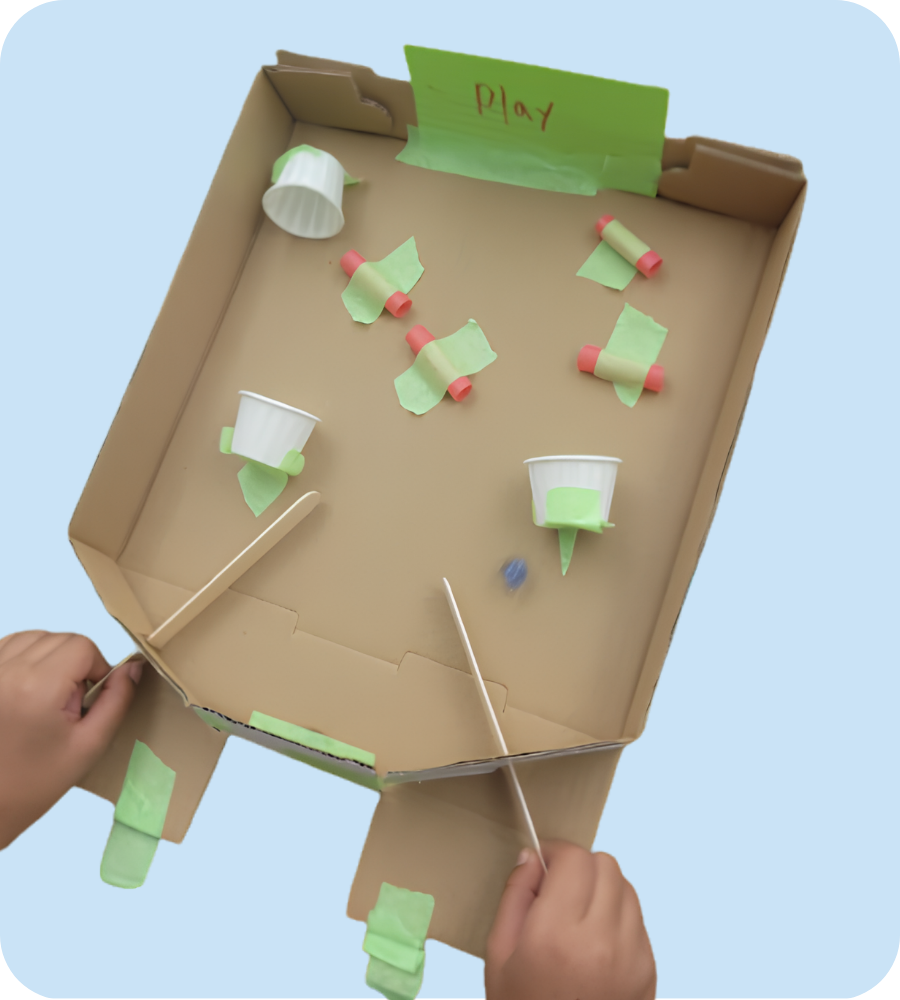
Fresno’s students took a trip to the arcade this year! During the 2025-2026 school year, AIMS partnered with Fresno Unified School District’s (FUSD) Career and Technical Education (CTE) Department to design and facilitate a one hour engineering workshop for third graders. The goal was to give students an opportunity to not just learn about engineers but to experience being engineers themselves. We developed “Pinball Lab” to encourage students to think creatively when problem solving and to support them in developing the perseverance and the confidence to test their own ideas through iteration.
In this workshop, third graders designed and built their own pinball games inside of a sloped cardboard box. Their game needed to include targets for their ball and obstacles. We chose open-ended materials to encourage tinkering and problem solving. We also wanted to use every-day, common materials to make the activity accessible. This approach gave students the structure of an engineering design challenge, while also providing an opportunity for them to practice agency in how they developed their projects.
Throughout the year, AIMS visited 45 FUSD schools and 156 classrooms! That is over 3,000 pinball games built and every single game created by a student was different from the rest. In every classroom, we observed students quickly realize that their initial ideas often didn’t work, and they were going to need to continuously test and improve their games. We saw students take ownership of and pride in their creations; we saw them excited to share their ideas with their peers and even more excited to take their games home.
We live in a world that is rapidly changing. We need future generations that are able to design solutions to problems that don’t even exist yet. Pinball Lab is just one example of how we can offer students the time and space to practice the steps of the engineering design process, which will undoubtedly help them develop critical innovation skills that will serve them regardless of what future career they choose.
Tools & Materials:
Shallow box (e.g. a pizza box)
Scissors
Tape
Small ball (e.g. marble)
Craft sticks
Building materials, such as straws, cardstock, small paper cups & rubber bands
A book with a thick spine (e.g. textbook)
Optional: markers
Activity
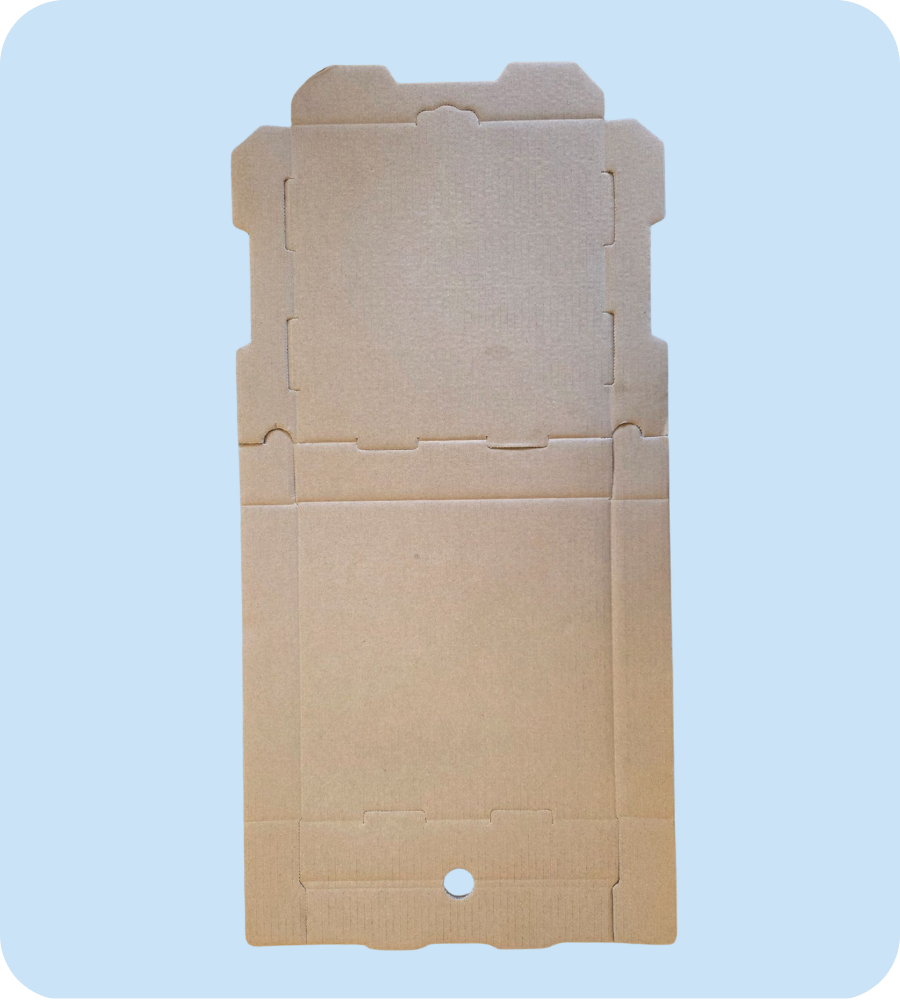
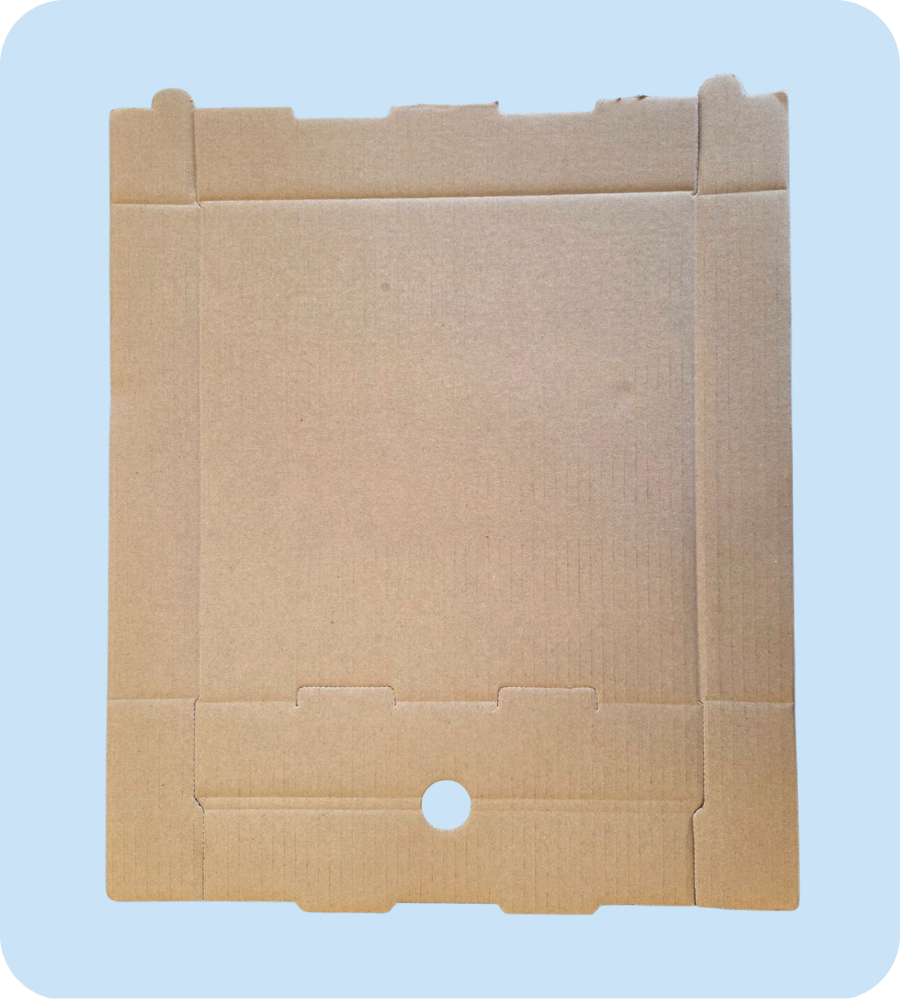
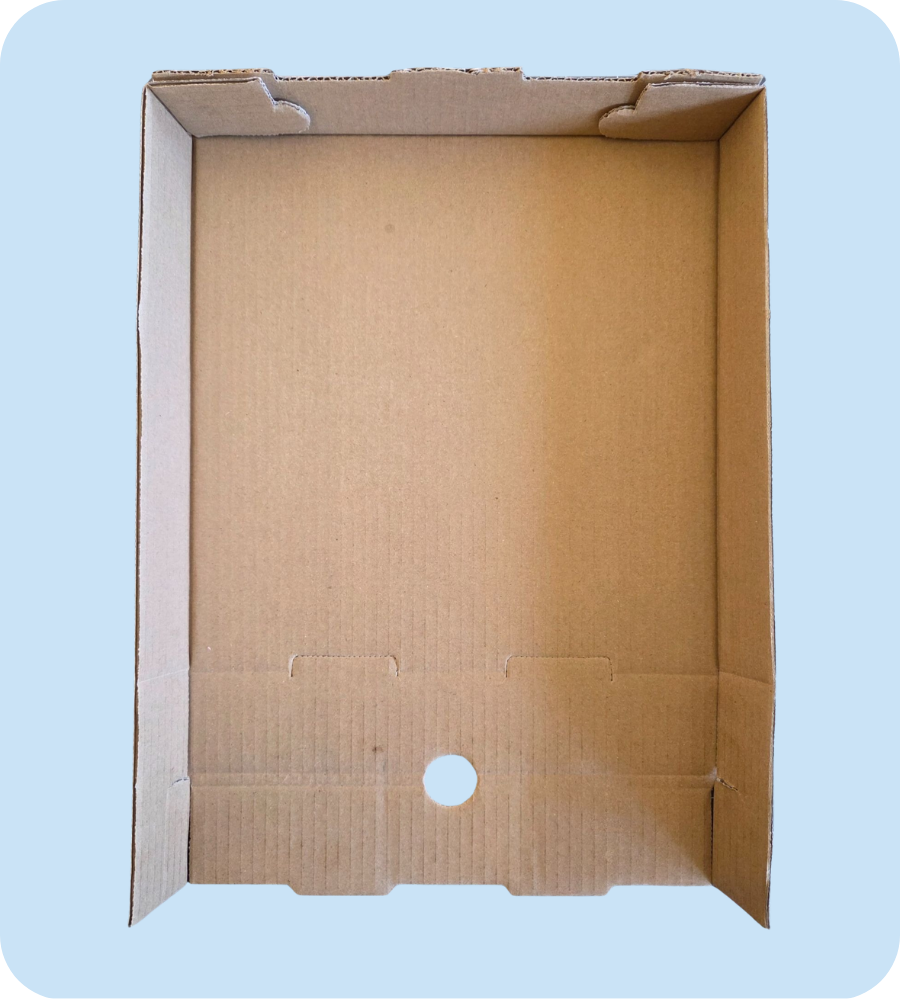
To build the box for the game, I used an unfolded 10x10 pizza box. However, you can use any small to medium-sized shallow box, and unfold the walls at one end of the box to build the angled walls at the bottom of the pinball game.
Step 1
Cut the lid off the box.
Step 2
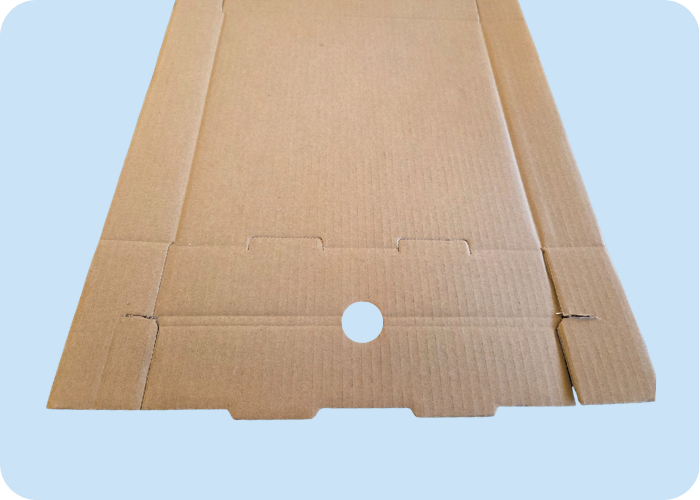
Cut a small slit in each of the bottom flaps — about the same length as the width of the craft stick.
Step 3
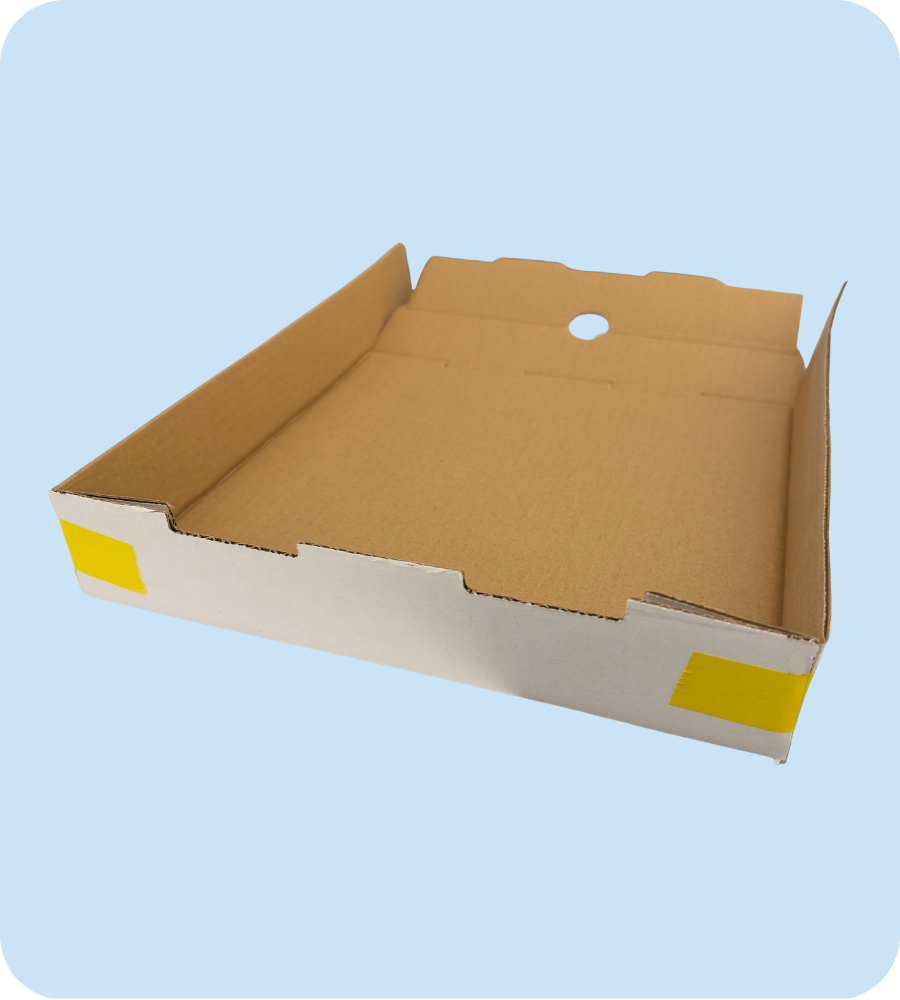
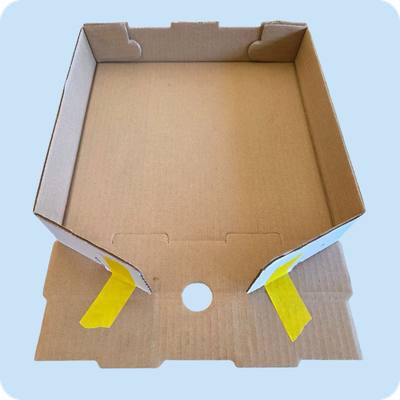
Fold the back and side walls up. Tape the corners together.
Step 4
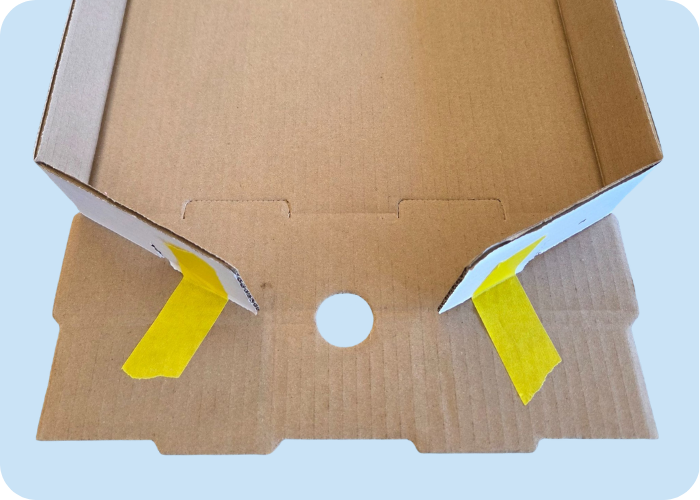
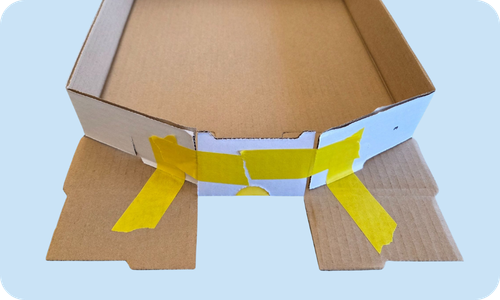
Angle the two bottom flaps inwards as shown in the photo and tape them down.
Step 5
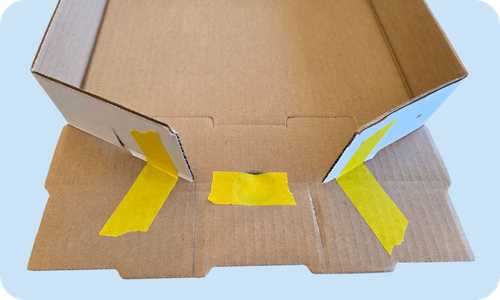
Cover any holes with a small piece of tape. Cut straight vertical lines from the bottom edge of the cardboard to the end of each angled wall. Fold this new wall up and tape it to each angled wall to close the gap.
Step 6
Tape the box to the edge of the table.
Step 7
Insert a craft stick through each slit. These will serve as the game’s flippers.
Step 8
Place a book with a thick spine under the back of the box to create a ramp.
Step 9
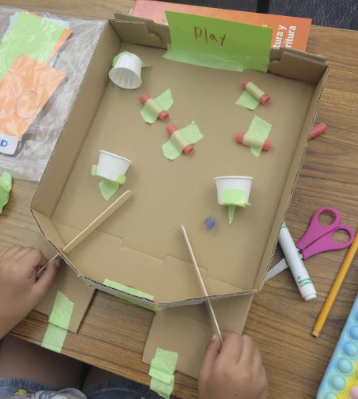
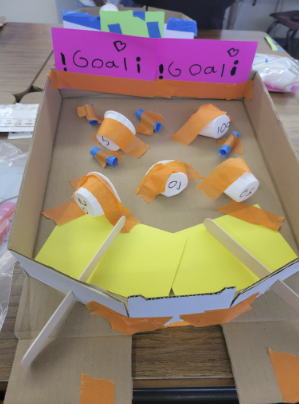
Use the craft materials to build pathways for your marble. Create a game by adding targets and obstacles. Get creative and have fun!
Examples
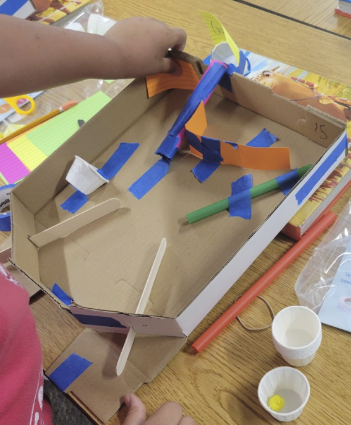
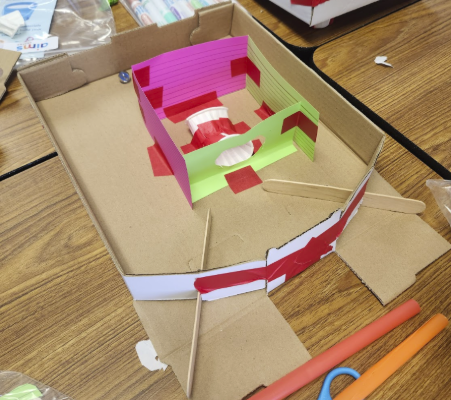
Going Deeper into the STEAM
As students built their games, they used their knowledge of important math and science topics. They used their spatial reasoning skills to design pathways for the ball. As they tested and improved their games, they experimented with force and motion and experienced simple machines (i.e. inclined planes and levers) to influence the ball. More importantly, we saw students practicing being curious and creative, while growing their confidence to persist through challenges.
Adaptations and Extensions
Students come with various experiences using craft materials. We found it really helpful to spend time reviewing how to use and cut tape before starting to build.
While this workshop was designed to be an hour long, most students would have benefited from more time to test and improve their games.
Change the building materials to adapt this activity. For example, younger children can use playdoh or clay to build the targets, obstacles and pathways. Older students can use cardboard, wood scraps and hot glue.
