
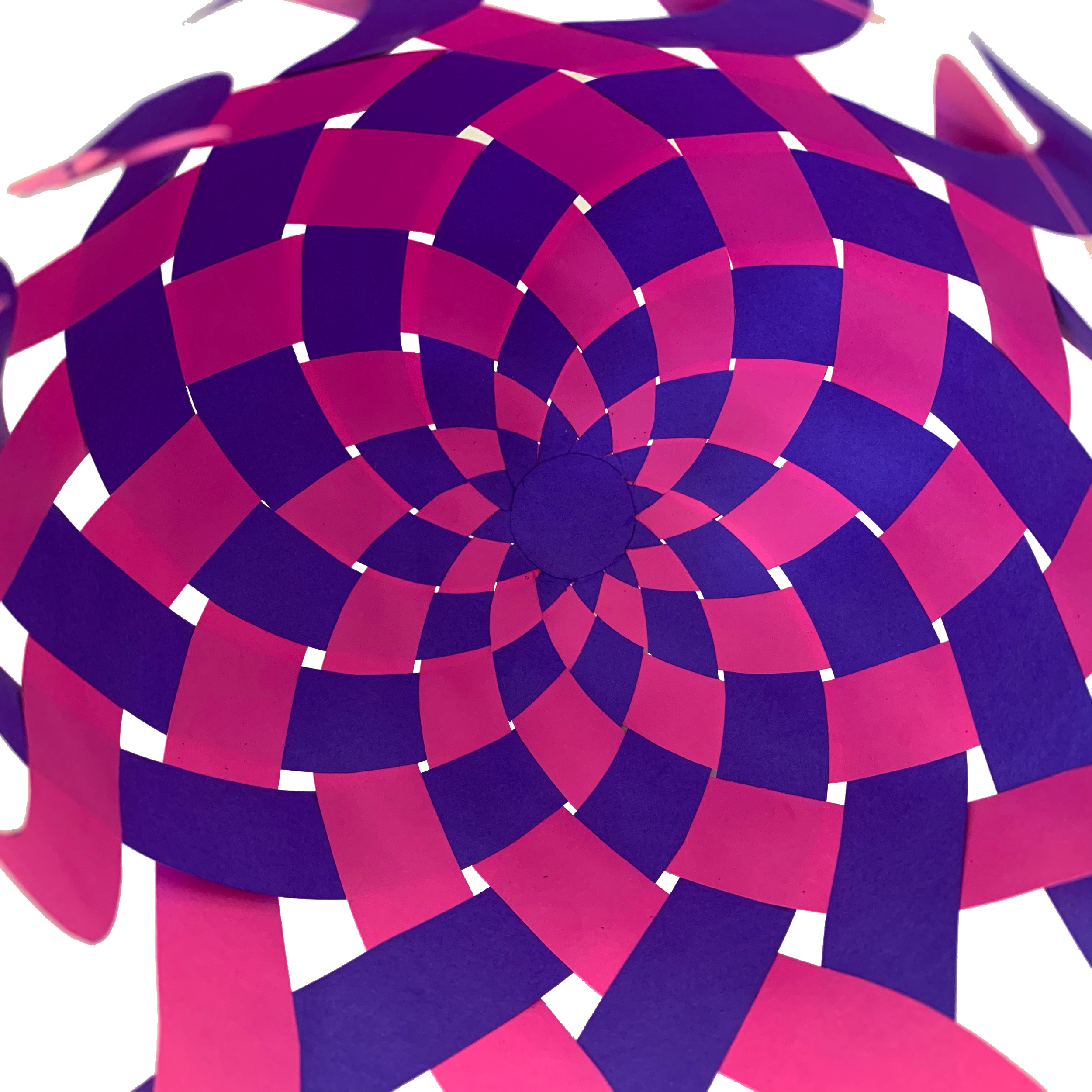
WEAVING
Weaving has a long history, beginning in ancient Egypt around 3400 B.C. This incredibly intricate art form has evolved in complexity throughout the ages with much historical and cultural significance. Humans are not the only ones that weave. Beavers build dams by weaving branches, many birds weave grasses to form their nest, and spiders that weave intricate silk webs.
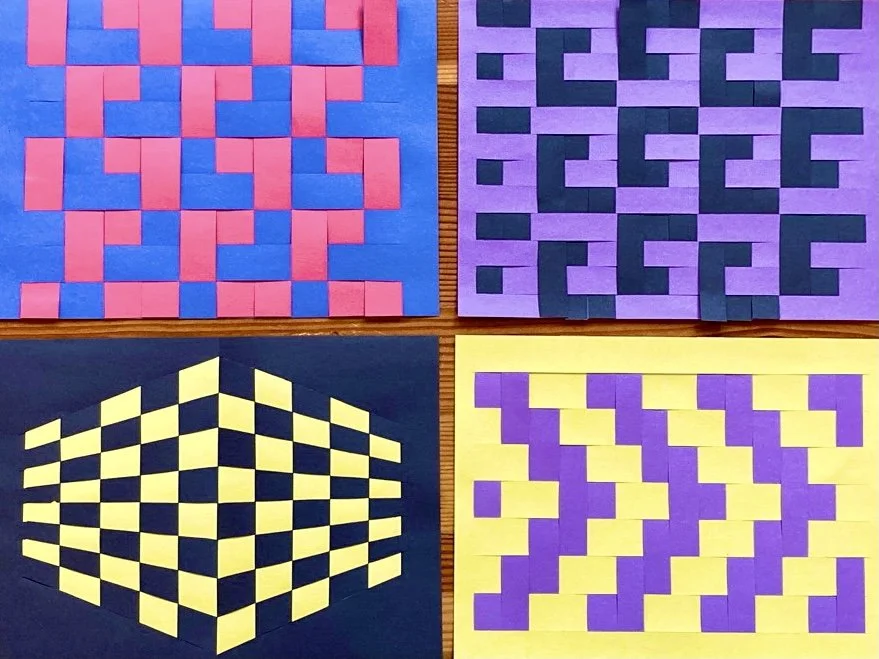
Introduction to Paper Weaving
Learn the basic weave pattern and construct an understanding of visible and hidden paper sections. Notice how repeating patterns can create unique designs. and how geometric concepts like shapes, angles, and different types of symmetry are applied.
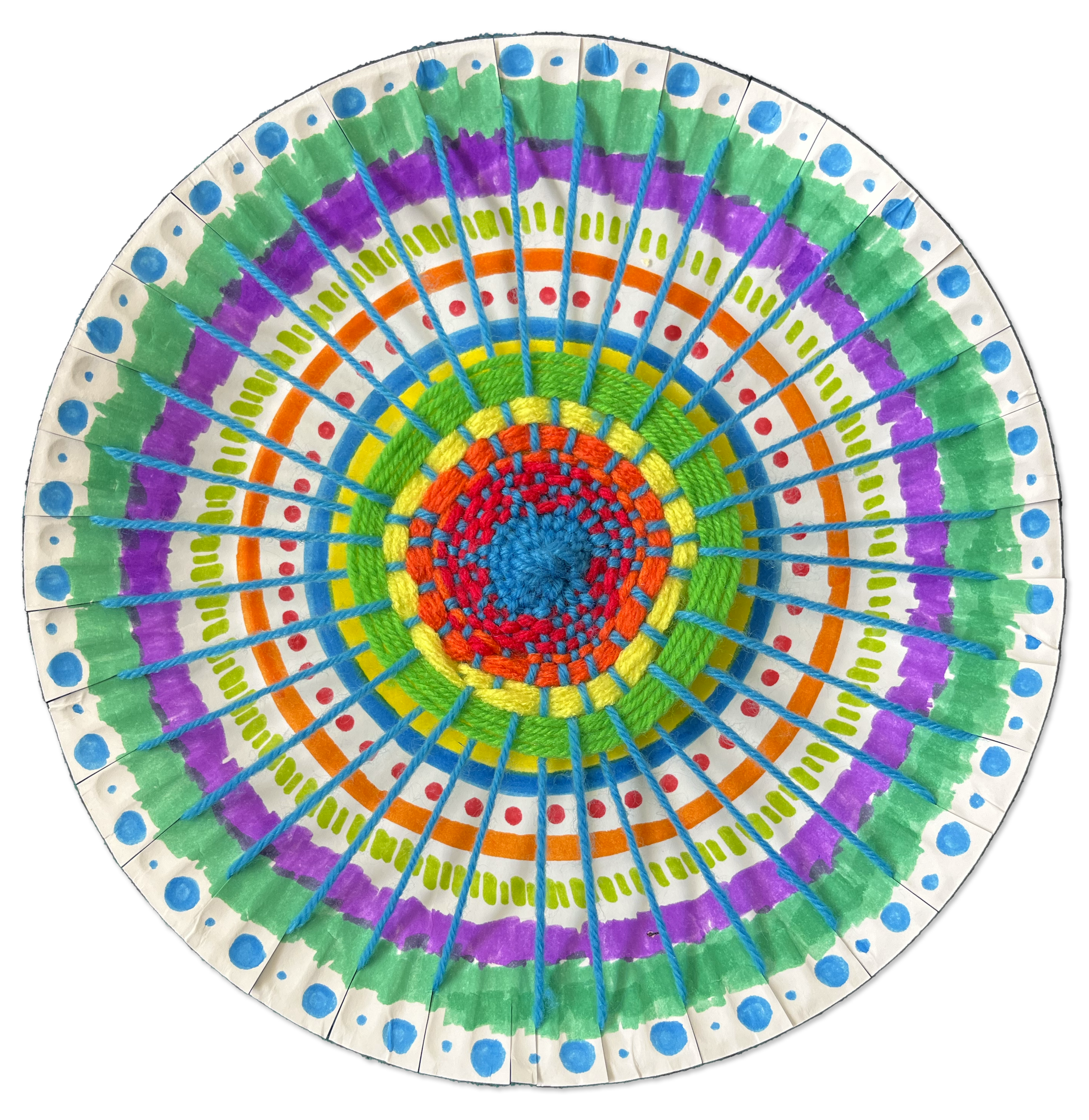
Circular String Designs
Create a simple warp on a paper plate, then weave yarn over and under the strands to design your own colorful woven piece while exploring patterns, texture, and the basics of weaving.
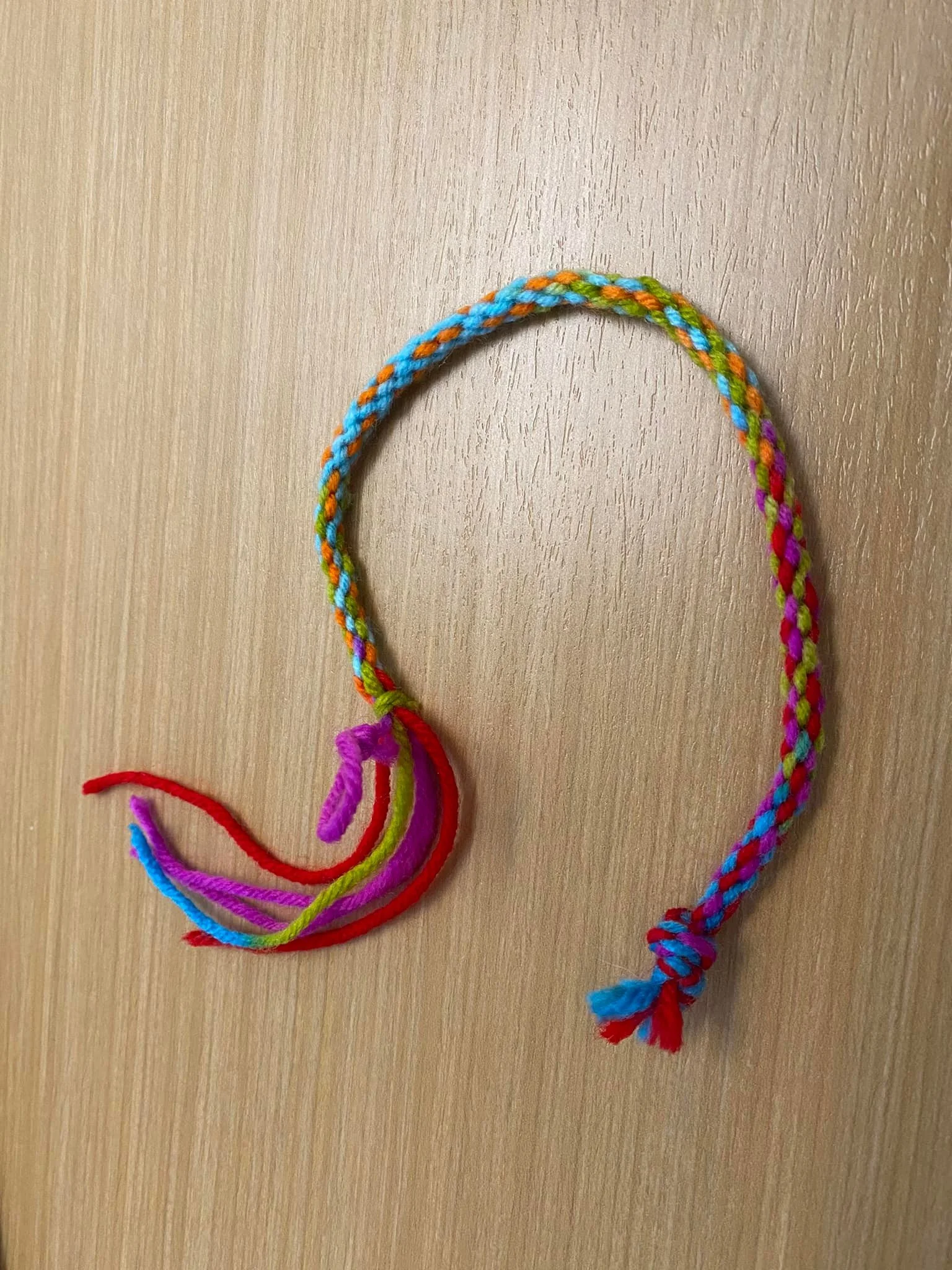
Kumihimo Weaving
Students will explore the Japanese art of Kumihimo (koo-mee-hee-moh), a traditional technique that means “gathering threads.” Using a circular Kumihimo loom template, weave colorful strands of yarn into a bracelet, keychain, bookmark, or other wearable work of art while building skills in patterning, design, and hand coordination.